



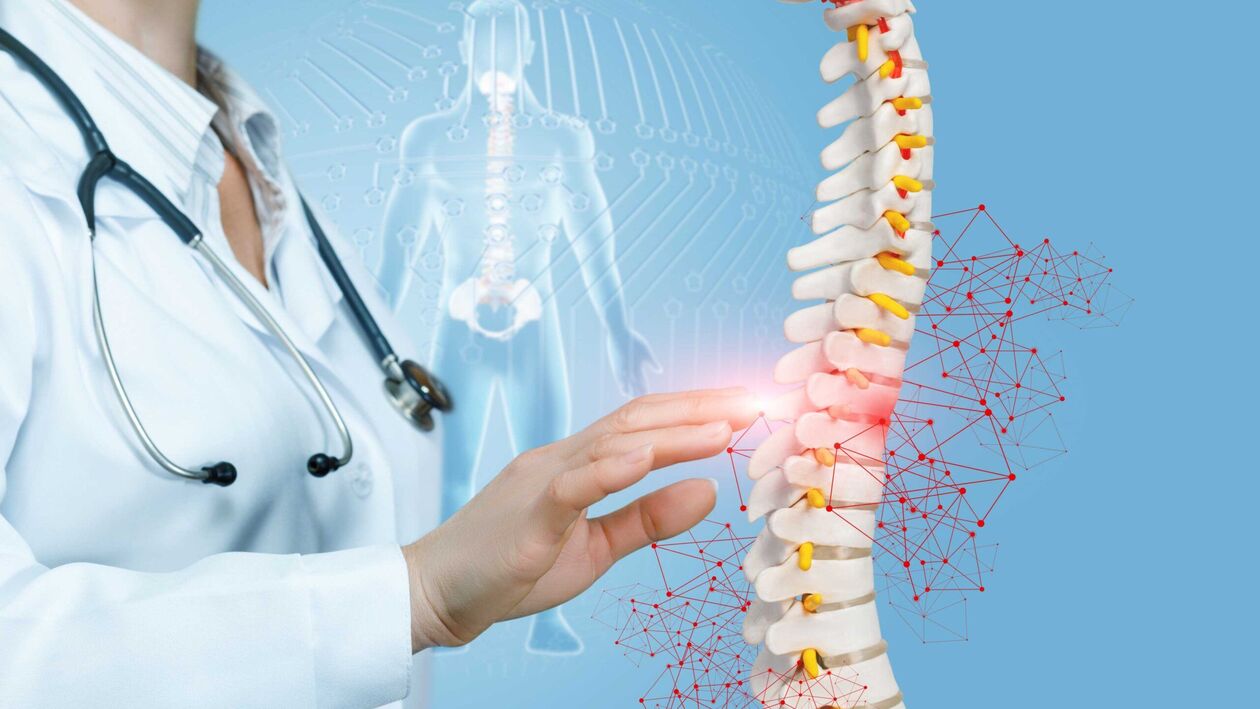
Osteochondrosis is a degenerative-dystrophic lesion of the spine, which leads to the destruction of intervertebral discs with corresponding consequences.Osteochondrosis "infects" the entire spine, but the symptoms of the disease are most pronounced when the cervical region, as the most mobile, and the lower back are affected.The chest region suffers the least.
The signs of neck osteochondrosis are very different, and they often resemble other diseases, which makes differential diagnosis and early recognition of the pathology difficult.In this article, we will take a closer look at how osteochondrosis of the cervical spine manifests itself and what will help you suspect this disease.
Degrees of osteochondrosis
Osteochondrosis is a chronic progressive disease that occurs with periods of remissions and exacerbations.Pronounced clinical symptoms do not appear immediately, but after some time, when the degenerative process enters the 2nd or even 3rd stage.
There are only 4 degrees of pathology:
- The initial phase is characterized by pathological changes inside the intervertebral disc.It loses moisture, leading to dystrophic changes, decreased disc height and cracks in the fibrous capsule.As a rule, there are no signs at this stage.Diagnosis is only possible with the help of an MRI of the spine.This is the most favorable stage for starting treatment, since in this case it is possible to completely restore damaged discs, which cannot be done in the future.
- Osteochondrosis of the 2nd degree is characterized by worsening of damage to the intervertebral discs.Their height decreases significantly, which leads to lowering of the spinal muscles and ligaments.All this causes instability of the damaged segment of the spine, increased mobility of the vertebrae, their displacement and sliding relative to each other and the spine.As a rule, it is at this stage that the first signs of the disease appear in the form of pain and other signs specific to injuries to the cervical spine.
- In the 3rd phase, protrusions and herniations of intervertebral discs develop.The symptoms of the disease are fully expressed.
- The 4th stage is the last.In this case, the formation of osteophytes and spinal deformities occurs.The body somehow tries to stabilize the damaged segment of the spine, which is why osteophytes develop, ossification of ligaments and other processes leading to stabilization of the vertebrae, but unfortunately this process is accompanied by vertebral subluxations and various types and degrees of spinal deformities.
The nature of the symptoms of cervical osteochondrosis
Manifestations of osteochondrosis in the cervical spine are associated with 3 mechanisms of the negative impact of this pathology:
- Direct compression of the spinal cord, which runs in the spinal canal.It should be noted that this happens very rarely with an advanced degenerative process and its complications.Compression of the nerve tissue in the spinal cord may be caused by a large intervertebral hernia, which projects directly into the lumen of the spinal canal;spinal canal stenosis (narrowing) due to degenerative changes;dislocations, subluxations, fractures of damaged vertebrae.
- Negative effect on the structures of the peripheral nervous system (spinal roots and nerve fibers) leaving the cervical spine.They can become compressed between adjacent vertebrae or hernial bulges and can become inflamed and irritated.All this leads to a number of serious symptoms.This is the most common group of signs of cervical osteochondrosis.
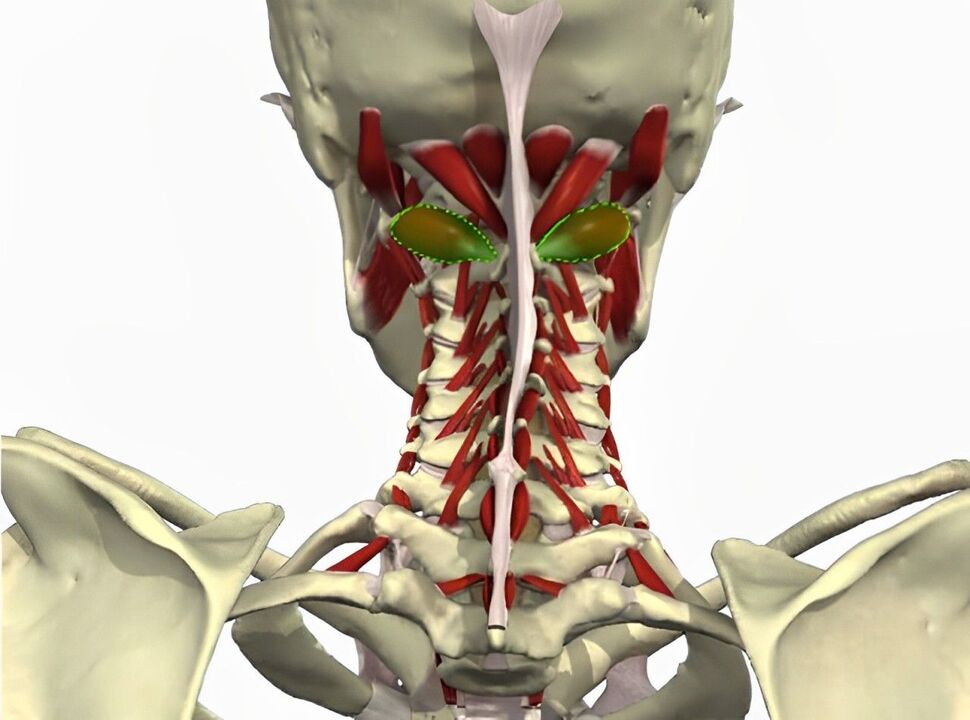
- Negative effect on blood vessels passing near the damaged area of the spine.In particular, a very important arterial vessel is of clinical importance - the vertebral artery, which passes through the openings of the transverse processes of the cervical vertebrae into the cranial cavity and supplies blood to the posterior third of the brain and cerebellum.
Let's consider in detail each group of mechanisms and what symptoms they cause.
Symptoms associated with spinal cord injury
As already mentioned, compression of the spinal cord with cervical osteochondrosis is very rare.This is a very serious condition that can cost a person not only his health, but also his life.
Injuries to the upper cervical spine are life-threatening.The cardiovascular and respiratory centers suffer, leading to immediate death.With compression at the level of the 3-4 segment of the spinal cord, tetraplegia develops (paralysis of all limbs and muscles during the injury).The respiratory muscles and diaphragm also suffer, which can lead to respiratory arrest and death.
If damage occurs at the level of 4.-5.segment of the spinal cord, tetraplegia develops, but without respiratory impairment.When 5-8 segments of the spinal cord are compressed, different muscle groups of the upper extremities suffer, and paraparesis of the legs and disruption of the pelvic organs occur.
Symptoms associated with nerve damage
Pain syndrome
First of all, it should be noted the pain syndrome, which can be chronic (cervicalgia) and acute in the form of lumbago (cervicalgia).Pain occurs in the neck, the occipital part of the head and the shoulder girdle.It is usually caused by irritation, compression and inflammation of the nerve roots in the cervical spine, as well as pathological spasm of the muscles in this area, which are innervated by these nerves.
The pain of cervicalgia is almost constant, aching and varies in intensity.As a rule, the pain syndrome can be tolerated.It appears or intensifies with sudden movements, turns and tilts of the head.Movements in the neck are accompanied by a characteristic crunching sound.
Cervical pain occurs suddenly in the form of a shot or electric shock.It is very intense, it goes to one of the hands.Lasts a few seconds or minutes and then gives way to cervicalgia.It is usually caused by sudden movements and compression of the nerve.

Radicular syndromes
All major nerves in the upper extremity (median, ulnar and brachial) are formed by nerve fibers that emerge from the cervical spine.Thus, in the presence of cervicobrachial osteochondrosis, these nerve structures may suffer.All these nerves are mixed, that is, they have both sensory and motor functions.Depending on which root is affected, the symptoms will be different.For examplesensitivity of the 2nd or 3rd finger may be lost and paralysis of one or more muscles may occur.All these signs of nerve damage are classified into separate syndromes that only a neurologist can determine.
Occipital neuralgia
Occipital neuralgia develops when the greater and lesser occipital nerves, which are formed by the 2nd, 3rd and 4th pairs of cervical spinal nerves, are damaged.When these structures are compressed, irritated or inflamed due to a degenerative-dystrophic process in the spine, headaches occur in the back of the head, which women very often complain about.
This pain is so typical that only its description makes it possible to make a correct diagnosis in 90% of cases.It is also called shooting cranialgia.An attack of pain occurs suddenly, has a unilateral localization (it rarely hurts on both sides), patients compare the nature of the pain with an electric shock.The attack lasts several minutes, but can be repeated several times a day.Pain occurs on the posterolateral surface of the neck and spreads upward to the occipital protuberance (repeats the anatomical course of the occipital nerve).At the same time, a sensitivity disorder may develop in the skin on the back of the head (numbness, crawling sensation).
Heart syndrome
This name is due to the fact that this manifestation of osteochondrosis of the cervical spine is very similar to angina pectoris and other heart diseases.The cause of this phenomenon is damage to the nerve fiber that innervates the pectoralis major muscle and the phrenic nerve, whose fibers are woven into the pericardium of the heart.
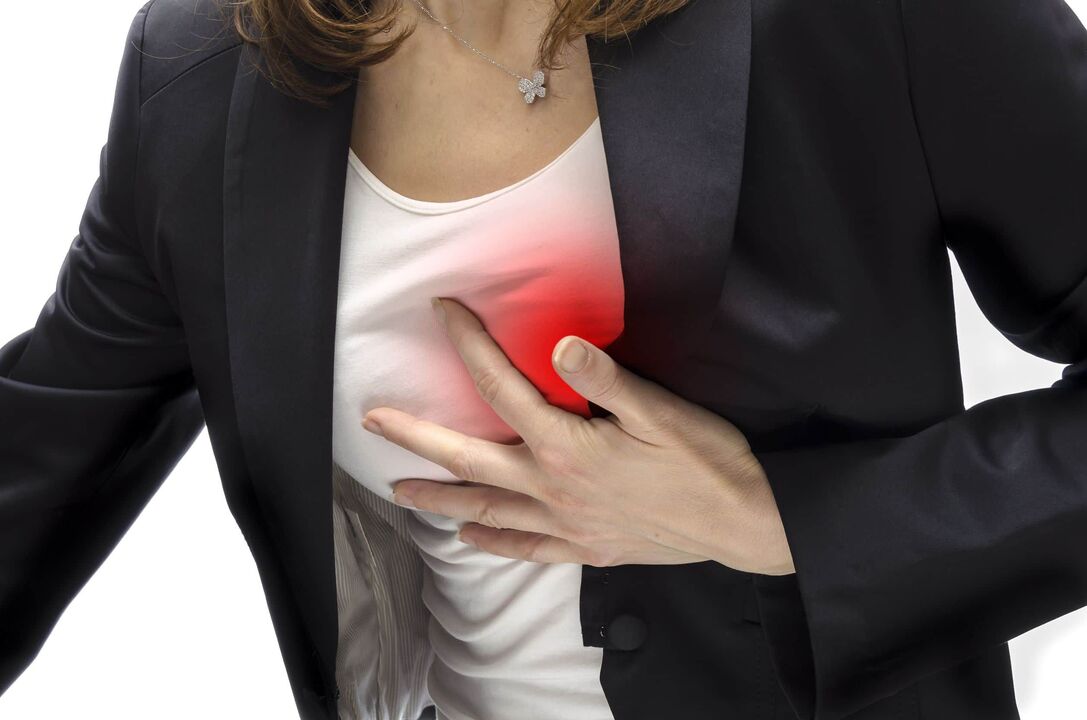
The cause of the pain is spasm of the pectoralis major muscle due to pathological impulses along the damaged nerve fiber.However, patients very often confuse this pain with heart pain.Unlike coronary pain, pain syndrome with cervical osteochondrosis has a long duration (sometimes several hours or days), which does not happen with angina pectoris, is not associated with physical activity, but there is a correlation with body position.The pain intensifies with sudden movements, turning the head, coughing, sneezing, which does not happen with angina pectoris.Antianginal medications (nitroglycerin, etc.) will not be effective.
Important!In any case, such symptoms require a thorough differential diagnosis, because atypical variants of angina and heart attacks also occur.In order not to miss a serious illness, you must first do an EKG.With osteochondrosis, no pathological changes will be recorded.
Symptoms associated with vertebral artery injury
Compression of the vertebral artery during cervical osteochondrosis can cause a large number of unpleasant manifestations, which are mainly associated with a decrease in blood flow and hypoxia in the part of the brain fed by this vessel (the posterior third of the brain and cerebellum).
Signs of vertebral artery syndrome:
- headache of a diffuse or pulsating nature in the back of the head, temples and parietal region;
- dizziness;
- nausea and vomiting;
- visual disturbances;
- ringing in the ears, reduced hearing;
- decreased coordination and balance;
- development of fall attacks (sudden falls without loss of consciousness due to sudden head turns);
- memory impairment, reduced performance, ability to concentrate.
Important to remember!With pronounced changes in the spine, the artery can be compressed so much that this will lead to the development of ischemic stroke in the vertebrobasilar region of the brain.Therefore, it is important to suspect pathology in time and take all necessary measures to improve the health of the spine and prevent further pathological changes.
Frequently asked questions
What symptoms accompany cervical osteochondrosis?
Symptoms of cervical osteochondrosis may include neck pain and stiffness, headache, dizziness, tinnitus, and tingling or numbness in the arms and shoulders.
How can you relieve the symptoms of cervical osteochondrosis?
To relieve the symptoms of cervical osteochondrosis, it is recommended to participate in physical training, maintain correct posture, avoid prolonged sitting in one position, use special pillows and mattresses, and also use physiotherapy methods.
Useful tips
Tip #1
Be aware of pain in the neck, shoulders and arms, which can be symptoms of cervical osteochondrosis.The pain may be sharp, dull or localized at certain points.
Tip #2
Be aware of numbness or weakness in the arms, fingers or shoulders, as this can also be caused by cervical osteochondrosis.
Tip #3
Pay attention to headaches, dizziness and tinnitus, as these symptoms can also be associated with cervical osteochondrosis.